
In the metallurgical industry, materials such as metal powders, alloy powders and refractory materials frequently suffer from agglomeration, high static electricity, ultra-fine particle size and screen blocking. Conventional screening equipment features low efficiency and poor precision, failing to meet the demands of high-end production. Integrating high-frequency ultrasonic technology with three-dimensional vibration principles, ultrasonic vibrating screens have become core equipment for fine metallurgical screening, widely adopted in classification, impurity removal and purification of metal powders.
It converts 220V electric energy into high-frequency mechanical vibration of 18–40kHz, which is transmitted to the screen mesh via transducers. The mesh generates tens of thousands of high-frequency micro-amplitude oscillations per second, eliminating electrostatic attraction and surface tension between powder particles to break agglomerates and prevent mesh clogging. Ultra-fine powders are maintained in a slightly suspended state to achieve high-efficiency and high-precision screening.
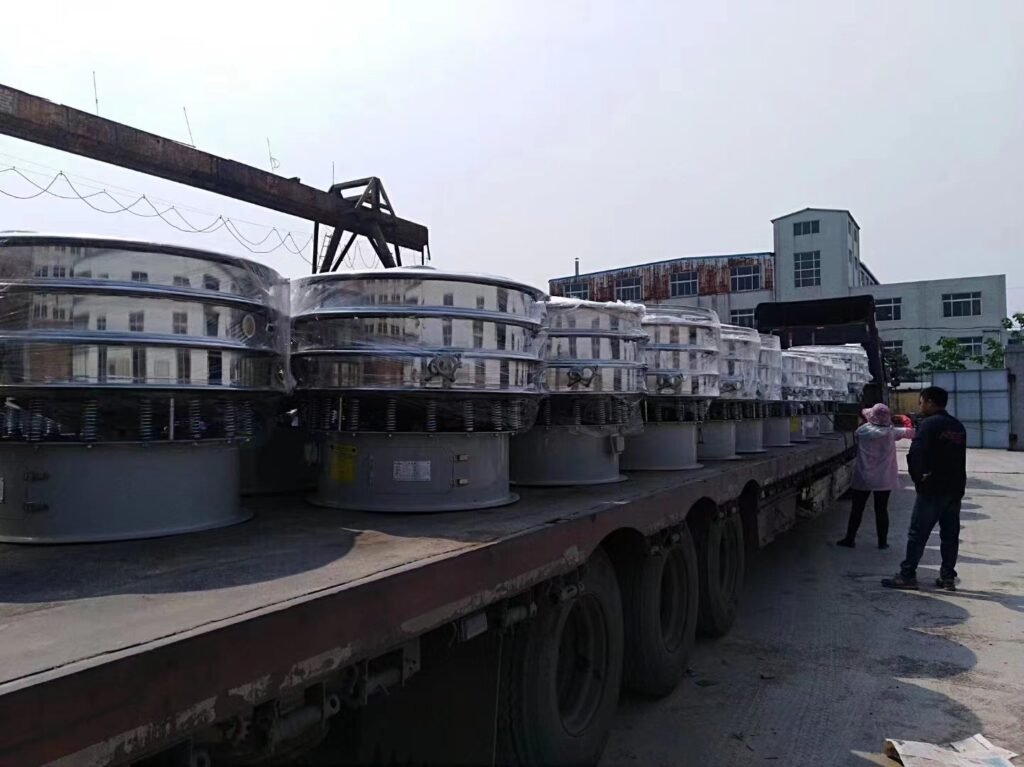
For metal powder production, this equipment processes various high-value powders including tungsten, cobalt, nickel, copper and titanium alloy powders. When handling 300–600 mesh ultra-fine powders, its screening efficiency exceeds 95%, with screening accuracy improved by 10% to 70%. For titanium alloy powder screening, the clogging rate of 325-mesh screens drops from 35% to below 5%, while screening speed triples, satisfying particle size standards for aerospace-grade powders.
In powder metallurgy and high-end manufacturing, the equipment precisely controls particle sizes ranging from 15μm to 53μm, suitable for producing 3D printing metal powders and magnetic material powders. Its fully enclosed structure eliminates dust pollution, making it ideal for screening highly active powders such as aluminum-magnesium alloys. It maintains extremely low oxygen content to guarantee stable product performance.
Moreover, equipped with wear-resistant screen meshes and reinforced thick frames, the machine adapts to long-term processing of hard metallurgical materials. It can be configured with 2 to 5 layers to complete multi-stage classification in a single pass, cutting floor space and labor costs. Frequent shutdowns for mesh cleaning are unnecessary, enabling continuous automatic operation.
In conclusion, ultrasonic vibrating screens resolve bottlenecks in screening ultra-fine metallurgical powders. They help manufacturers boost product purity and production efficiency, drive the metallurgical industry toward refined and high-end development, and serve as essential processing equipment for metallurgical powders.