
Bulk bag unloading stations are integrated, enclosed automated equipment designed for hoisting, unpacking, and discharging bulk bags while controlling dust. They have become core equipment in the feeding process of bulk powders and granular materials in the chemical industry, widely used in plastics, rubber, coatings, dyes, chemical fertilizers, chemical additives, and other subsectors. They efficiently handle various materials such as PE/PVC resin powder, titanium dioxide, carbon black, flame retardants, and fertilizer granules, providing critical support for safe, environmentally friendly, and efficient chemical production.
Most materials in the chemical industry are corrosive, toxic, flammable, explosive, or prone to dust emission. Traditional manual unpacking and feeding suffer from dust leakage, high labor intensity, high safety risks, and low efficiency. Bulk bag unloading stations use electric hoists for automatic hoisting and positioning of bulk bags, paired with sealed bag-clamping devices to create a fully enclosed workspace, blocking dust diffusion at the source. Equipped with negative pressure dust removal systems, they quickly absorb feeding dust and discharge purified air up to standard, effectively improving the workshop environment, protecting operators’ health, and reducing material loss. For easily caked and highly adhesive chemical materials, the equipment is fitted with pneumatic beating and vibration-assisted flow devices to eliminate material arching and blockages, ensuring smooth discharging and improving material utilization.
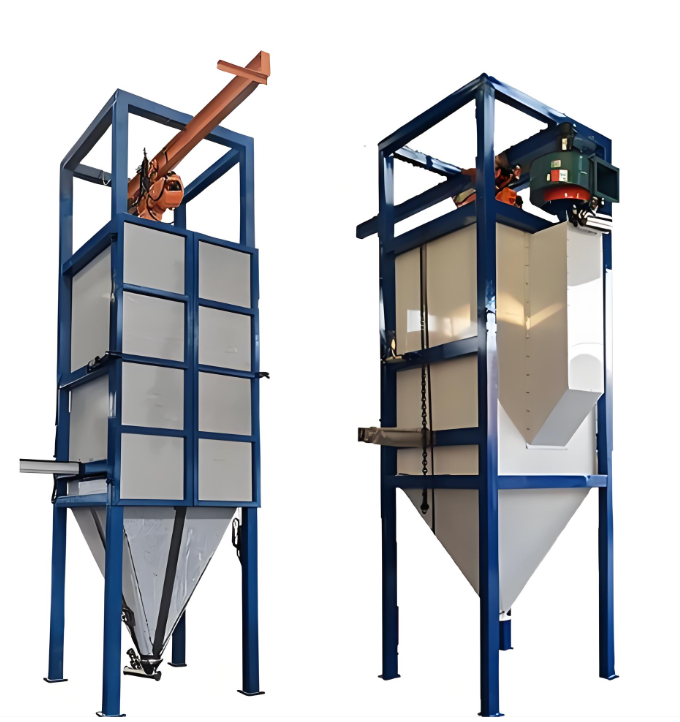
In terms of safety adaptation, the equipment can be customized with corrosion-resistant materials such as 316L stainless steel and fiberglass to handle acidic and alkaline corrosive materials. Explosion-proof motors and anti-static devices are installed to meet explosion-proof production requirements for flammable and explosive powders, complying with safety production standards in the chemical industry. Its automated operation replaces 3–5 workers, with a single unit processing 6–12 bags per hour, improving feeding efficiency by 3–5 times compared to manual labor and significantly reducing labor costs.
In addition, bulk bag unloading stations can be seamlessly connected to downstream equipment such as reaction kettles, mixing tanks, granulators, and silos. Enclosed material conveying is realized through screw conveyors and pneumatic conveying systems, forming an integrated process from unpacking to feeding and ensuring continuous and stable production. At present, this equipment has become standard for green production and intelligent upgrading of chemical enterprises, helping them optimize production processes, reduce operating costs, meet environmental compliance requirements, and promote the transformation of the chemical industry towards a modern production model of high efficiency, safety, and environmental protection.
