
Screw conveyors, also known as auger conveyors, feature a simple structure, excellent sealing performance and strong adaptability. They have become core equipment for conveying powdery, granular and small block materials in the building materials industry. Widely applied in cement production, new building material processing and concrete preparation, they satisfy the requirements of high-efficiency production and environmental protection.
In cement production, screw conveying runs through the entire manufacturing process. Sealed screw conveyors are used to transport raw meal from mills to rotary kilns and deliver finished cement from grinders to storage silos or packaging machines. This effectively prevents dust leakage, improves workshop conditions and ensures material cleanliness. For high-temperature clinker, models made of 310S heat-resistant steel can withstand temperatures up to 400℃ and achieve stable conveying of high-temperature materials.
Screw conveyors are extensively adopted in the production of new building materials. In gypsum board production lines, they accurately feed gypsum powder into mixers for uniform blending with water and additives, stabilizing slurry quality. In aerated brick plants, inclined screw conveyors transport fly ash, prevent material caking and ensure precise batching.
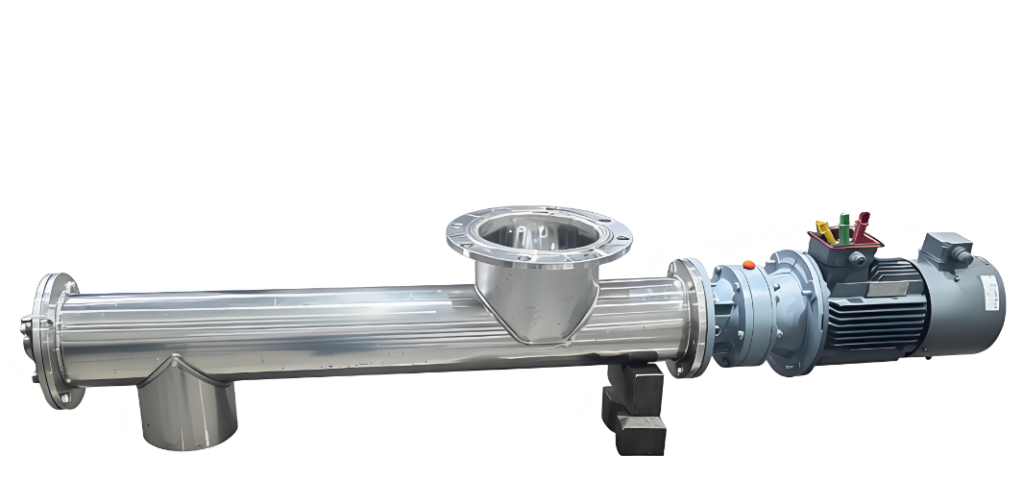
They are indispensable in concrete mixing stations and construction sites. Screw conveyors accurately deliver cement, fly ash and other powdery materials to mixers, ensuring accurate proportioning and improving the strength and stability of concrete. Capable of inclined or vertical installation, they transport materials to different floors, adapt to complex construction conditions and accelerate construction progress.
Compared with bucket elevators and pneumatic conveying systems, screw conveyors have lower energy consumption, simpler maintenance and controllable operating costs. Their fully enclosed structure reduces dust pollution, complies with environmental regulations and supports green production in the building materials industry. They can be installed horizontally, inclinedly or vertically with flexible layout to fit various factory and site spaces.
In conclusion, screw conveying technology has been deeply integrated into all links of the building materials industry, solving major problems in conveying efficiency, environmental protection and spatial adaptability. With the development of green building materials and intelligent manufacturing, continuous optimization of materials and structural upgrades will enable screw conveyors to adapt to more special materials and working conditions, providing strong support for the high-efficiency and low-carbon development of the building materials industry.