
With the advantages of compact structure, sealed environmental protection and strong adaptability, the screw conveyor (auger) has become the core equipment for continuous conveying of powder, granular and small lump materials. It is widely used in dozens of industries such as building materials, grain, chemical industry, mining, environmental protection and food, and adapts to various conveying modes including horizontal, inclined and vertical.
In the building materials industry, it serves as the main conveying equipment for cement, lime, gypsum, sandstone, coal powder and other materials. In cement plants, it transports raw materials to rotary kilns and clinker to grinding stations. In mixing plants, it conveys aggregates and powder materials. The tubular sealed design greatly reduces dust leakage and meets environmental protection standards.
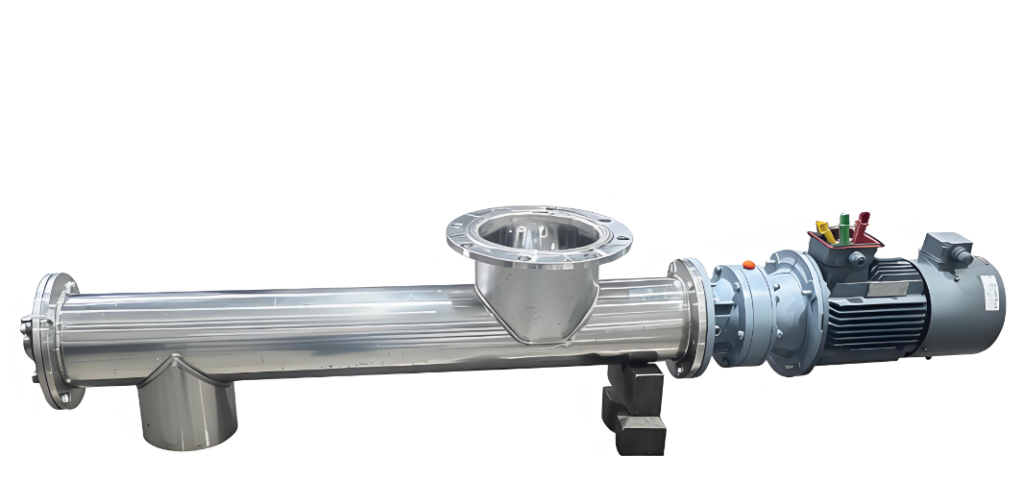
In the grain and feed industry, U-type or tubular screw conveyors are applied to warehouse transportation, production line connection and quantitative feeding of wheat, corn, flour and feed. Made of 304 stainless steel, it complies with food hygiene standards, featuring easy cleaning and pollution prevention.
In chemical and pharmaceutical fields, screw conveyors are suitable for conveying chemical fertilizers, pigments, resins, pharmaceutical powder and other materials. Stainless steel and anti-corrosion materials resist acid and alkali corrosion, and the sealed structure avoids leakage of harmful substances. Some models can realize conveying and mixing simultaneously to improve production efficiency.
Wear-resistant screw conveyors are adopted in mining and metallurgy to transport ore, slag and concentrate powder, adapting to heavy-load and high-working conditions. Inclined models can complete material transportation on slopes.
Shaftless screw conveyors are commonly used in the environmental protection industry to convey sludge and kitchen waste, solving the adhesion and blockage problems of viscous materials, and widely supporting sewage treatment and waste incineration projects.
In addition, it is also used for fly ash conveying in the power industry and sugar, salt and starch transportation in the food industry. Customized designs enable it to adapt to special working conditions such as high temperature, explosion-proof and low temperature, making it an indispensable key device in industrial bulk material handling systems。
