
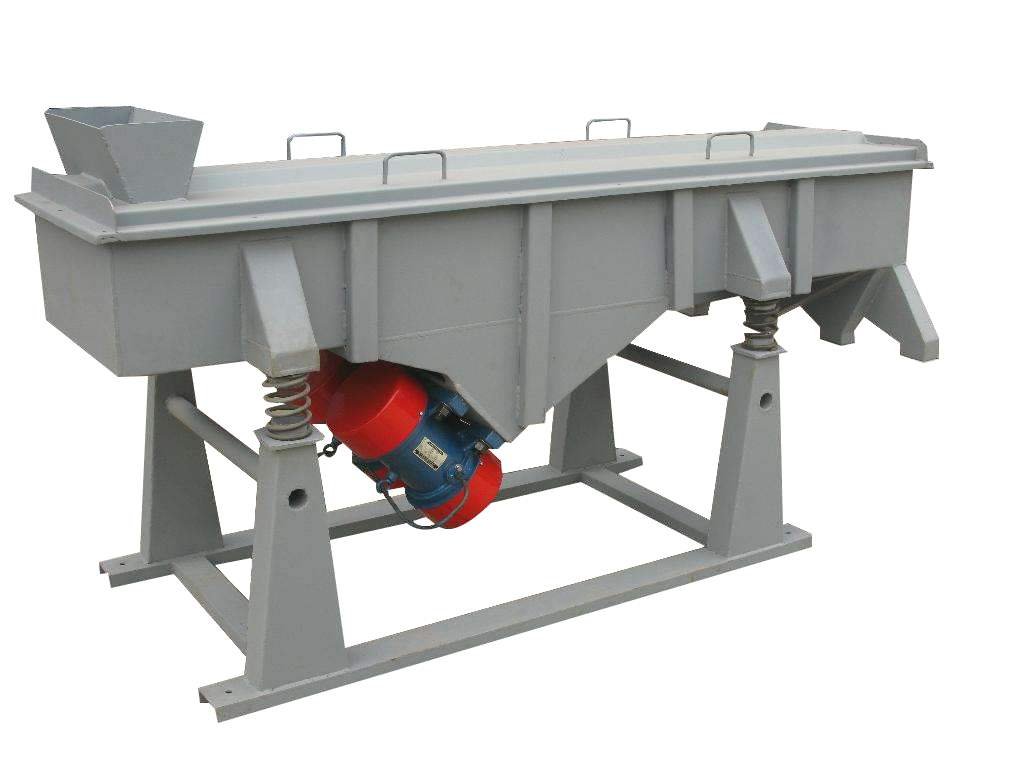
As the core equipment in the industrial screening field, the linear vibrating screen features linear motion track, high-precision classification and large processing capacity. It is widely applicable to various dry and wet working conditions, and realizes key processes such as raw material cleaning, particle size classification, dewatering and medium removal in multiple industries. It is an essential device to guarantee production efficiency and product quality.
Metallurgy, Mining and Coal Industry
As one of the core application scenarios, the linear vibrating screen undertakes key tasks including ore classification, furnace feed screening, and coal washing & dewatering. For hard materials such as iron ore, copper and aluminum powder, quartz sand, it adopts high-carbon steel or polyurethane screen mesh, adapting to high-temperature and high-wear working conditions with a screening efficiency of over 95%.
In coal preparation plants, it can classify raw coal of 300-0mm, remove medium from fine coal and dewater gangue, with a maximum processing capacity of 800t/h. The fully enclosed structure combined with a negative pressure dust removal system meets the safety and environmental protection requirements of the coal industry.
In an upgrading case of an iron ore concentrator, the linear vibrating screen with double-layer polyurethane screen mesh increased the processing capacity from 200t/h to 480t/h, raising the annual output of concentrated powder by 120,000 tons and greatly improving comprehensive benefits.
Chemical and Building Materials Industry
In the chemical industry, the linear vibrating screen is used for fine classification of raw materials such as chemical fertilizer, urea, resin, pigment and activated carbon, achieving precise impurity removal for materials within 400 mesh. Models integrated with PLC control support remote parameter adjustment, with screening efficiency increased by 40% and dust emission reduced by 60% compared with traditional equipment.
In the building materials industry, it ensures the particle size uniformity of sand and gravel aggregates, refractory materials and cement clinker. It is applied to ceramic raw material classification and particle size control of cooled cement clinker, providing stable raw material support for building materials production.
Food, Pharmaceutical and Light Industry
In food processing, linear vibrating screens are mostly made of food-grade stainless steel, complying with FDA and hygiene standards. It performs impurity removal and classification for raw materials like soybeans, sesame, starch and salt, realizing dust-free screening and dewatering in milk powder and flour production, with the impurity rate controlled below 0.1%.
The pharmaceutical industry follows strict GMP cleanliness standards. It is used for grading and screening of Chinese herbal pieces, granular pills and micro-pills, accurately removing foreign matters to ensure pharmaceutical purity and particle consistency.
In light industry, it is suitable for screening condiments, plastic particles, abrasives and other materials to meet diversified production demands.
Core Value and Selection Key Points
The linear vibrating screen supports 2-5 layers of screen mesh configuration, separating 4-6 particle size grades at a single time, with an adjustable inclination angle of 0°-15°, suitable for materials with different fluidity.
The fully enclosed structure effectively prevents dust leakage; dual-motor drive ensures continuous operation. Equipped with an ultrasonic mesh cleaning device, it solves the mesh blocking problem of sticky and wet materials.
During model selection, the screen mesh material shall be selected according to material characteristics (particle size, humidity, hardness), and the model shall be determined based on processing capacity, so as to achieve efficient screening and cost optimization, and provide reliable support for production processes in various industries.