
In the closed conveying of granular materials, positive pressure and negative pressure pneumatic conveying are two mainstream solutions. They differ greatly in working principles, applicable scenarios, advantages and disadvantages. The selection shall be determined comprehensively based on material properties, working conditions and conveying distance, which will be analyzed one by one combined with practical applications below.
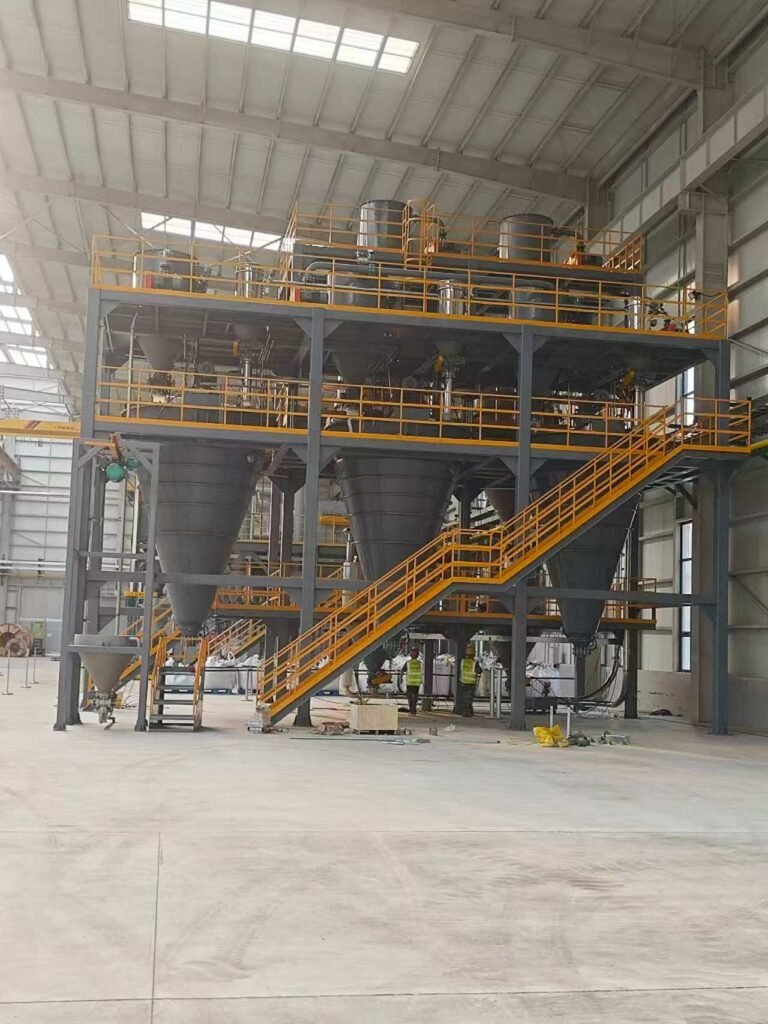
Negative pressure pneumatic conveying sucks materials by negative pressure inside the system, with all equipment under negative pressure. Its core advantage is excellent tightness. During conveying, the air pressure inside pipelines and equipment is lower than the external atmospheric pressure. Even if there are tiny gaps at joints or pipelines, only outside air flows inward without leakage of granular dust, completely eliminating dust emission. It is especially suitable for materials with strict environmental protection and occupational protection requirements, such as flour, pharmaceutical powder, chemical powder, toxic, harmful and volatile granular materials. Meanwhile, the negative pressure system features easy feeding and multi-point material collection, which is ideal for centralized feeding from multiple silos and hoppers with flexible equipment layout. However, it is limited by low conveying pressure, short conveying distance and small throughput. Its energy consumption rises sharply and efficiency drops drastically for long-distance conveying. Besides, it is not applicable for high-moisture and sticky materials that may cause pipeline blockage.
Positive pressure pneumatic conveying pushes materials forward through high-pressure airflow, with internal system pressure higher than the outside. It boasts high conveying pressure and large throughput capacity. It enables long-distance and high-flow conveying up to hundreds of meters, and supports single-point feeding and multi-point discharging, widely adopted for bulk granular material transportation in mining, building materials, grain and other industries. Featuring robust structure and low risk of pipeline blockage, it is compatible with granular materials of various hardness and moisture contents. Nevertheless, the positive pressure system demands extremely high sealing performance. Any leakage on pipelines or valves will lead to outward ejection of dust carried by high-pressure airflow and cause dust pollution, making it unsuitable for toxic, high-value, ultra-fine and easily scattered powders. In addition, positive pressure equipment has complicated startup and shutdown procedures, with sealing devices required at the feeding end, and multi-point material collection is difficult to realize.
Clear principles can be followed for type selection: negative pressure conveying is preferred for short-distance multi-point feeding scenarios requiring dust prevention, explosion protection and material leakage prevention; positive pressure conveying is prioritized for long-distance high-volume transportation of bulk granular materials with general dust control requirements. Combined positive and negative pressure systems can be adopted for some complex working conditions to balance tightness and conveying capacity. Enterprises shall select the proper conveying mode according to material characteristics, conveying distance and on-site environmental standards, so as to realize energy-saving and efficient operation while ensuring fully closed material conveying.