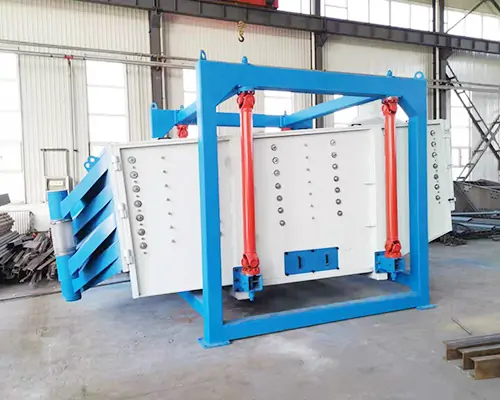
Spiral conveying, also known as auger conveying, is a continuous conveying technology that relies on rotating spiral blades to push materials. As a conveying equipment without flexible traction components, it has the advantages of exquisite structure and strong adaptability, and is widely used in various fields of industrial production. It has become the core equipment for bulk material transfer, efficiently connecting all links of production and boosting production capacity.
Its core working principle is simple and efficient: the drive device drives the spiral shaft to rotate. The materials loaded into the closed machine trough do not rotate synchronously with the spiral blades under the action of their own gravity, internal friction between particles and external friction with the trough wall. They only move directionally along the machine trough under the axial thrust of the blades, and are stably conveyed from the feed inlet to the discharge outlet, realizing the continuous transfer of powder, granular and small block bulk materials, which is similar to the movement logic of a nut moving axially along a screw.
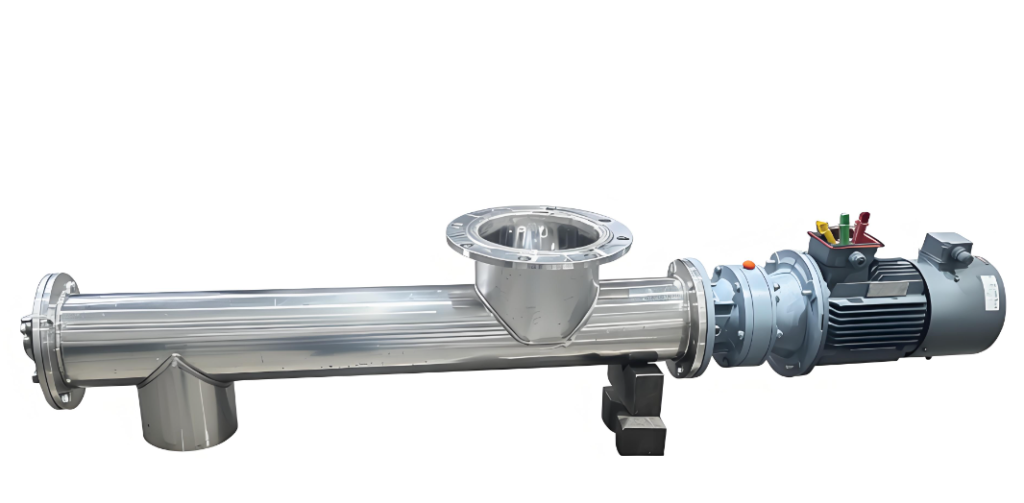
The core advantages of spiral conveying are prominent and practical. It has a compact structure and small floor space, can flexibly realize horizontal, inclined and even vertical installation, adapt to complex sites such as workshop corners and floor gaps, and can be integrated into the existing production line without major transformation; it has excellent sealing performance, and the full closed conveying can effectively prevent dust overflow, material dampening or pollution, meeting the needs of environmental protection and material protection.
At the same time, it is convenient for operation and maintenance and cost-effective. The core components have strong versatility, easy inspection and replacement, and the blade type and material can be flexibly adjusted according to the material characteristics, adapting to the needs of various industries such as grain, building materials, chemical industry and environmental protection. From the grain transfer in grain depots, the raw material conveying in cement plants to the sludge transfer in sewage treatment plants, spiral conveying can play a stable role. It also has additional functions such as conveying, mixing and loosening, simplifying the production process.
Nowadays, spiral conveying is upgrading towards large-scale, electromechanical integration and energy conservation and environmental protection. With its efficient, stable and flexible characteristics, it solves various bulk material conveying problems and becomes an indispensable efficient conveying partner in modern industrial production.